
The convergence of quantum computing (QC) breakthroughs, massive government and private investment, and the imminent threat to current encryption has positioned the quantum sector at a critical inflection point in the mid-2020s. This is no longer merely a scientific curiosity; it is a trillion-dollar technological transformation that is fundamentally altering finance, pharmaceuticals, materials science, and cybersecurity.
For high-value investors, tech executives, and financial modelers, understanding the trajectory toward “Quantum Advantage” and the urgency of Post-Quantum Cryptography (PQC) readiness is essential. This in-depth article, optimized for SEO performance and high Google AdSense revenue, explores the landscape, applications, and investment dynamics of the quantum revolution.
I. The Tectonic Shift in Quantum Investment in 2025
The year 2025 marks the clear transition of quantum technology from pure research to commercial execution. Investment figures reveal a sector aggressively moving past the “hype curve” and into practical application development.
A. Record Capital Inflow and Market Maturation
The first half of 2025 saw an unprecedented surge in private and public funding, demonstrating global confidence in the near-term commercial viability of quantum systems.
A. Private Funding Explosion: Investment in quantum computing firms more than doubled year-over-year, with private capital rounds exceeding $1.25 billion in Q1 2025 alone. This capital influx signals that venture capital and corporate strategic investors are now betting heavily on the potential for revenue generation and profit within the next decade.
B. Strategic Corporate Acquisitions: Major tech players and large financial institutions are engaging in aggressive mergers and acquisitions to acquire specialized quantum talent and proprietary intellectual property (IP). This strategy is driven by the need to integrate quantum expertise quickly into core business units like drug discovery and financial risk modeling.
C. Government Commitments Escalating: Global public funding for quantum initiatives now exceeds $55 billion, with major programs in the U.S. (National Quantum Initiative), the EU (Quantum Flagship), and China (massive state-backed funds). This government spending de-risks early-stage technology development and accelerates the construction of national quantum research infrastructure.
B. The Race for “Quantum Advantage”
The ultimate goal is achieving Quantum Advantage, the point where a quantum computer can solve a practically useful problem demonstrably faster or better than the most powerful classical supercomputer. While true, fault-tolerant, universal quantum computers are still years away, current noisy intermediate-scale quantum (NISQ) devices are already demonstrating value.
A. NISQ Era Breakthroughs
Companies are utilizing NISQ devices to execute hybrid quantum-classical algorithms. These systems use a classical computer to handle most of the processing, offloading only the computationally intensive, quantum-specific parts (like complex optimization or simulation) to the quantum processor.
B. Topological Qubits and Fault Tolerance
A key hurdle is decoherence, the instability of the quantum state. Significant research is now focused on topological quantum architectures (like Microsoft’s efforts with Majorana fermions) which promise a path toward inherently more stable, fault-tolerant qubits that can be scaled into reliable, error-corrected quantum machines.
C. Qubit Scaling and System Size
There is an intensive race to increase the number of stable, interconnected qubits (the quantum equivalent of classical bits). The number of qubits is one metric, but quantum volume—which measures both qubit count and error rate—is the truer indicator of a system’s practical computational power and ability to run complex algorithms.
II. High-Value Enterprise Applications and Monetization
The promise of quantum computing is translating into tangible, high-value applications across three core economic sectors, attracting the attention of large enterprises and specialized investors.
A. Quantum Finance: Optimization and Risk Management
The financial sector, with its reliance on complex, large-scale optimization and simulation, is one of the most immediate beneficiaries of quantum computing.
A. Portfolio Optimization
Quantum optimization algorithms are exponentially more efficient at solving the NP-Hard problem of portfolio allocation. They can analyze a vastly greater number of potential investment combinations to optimize expected returns while minimizing market risk, leading to superior financial models and trading strategies.
B. High-Speed Derivative Pricing
Quantum computers significantly accelerate Monte Carlo simulations, which are crucial for the accurate and real-time pricing of complex financial derivatives (options, swaps). This capability enables institutions to perform more precise risk analysis, stress tests, and scenario analyses in a shorter time frame.
C. Fraud Detection and AI Enhancement
Quantum Machine Learning (QML) algorithms can be applied to massive transaction datasets to detect subtle, complex, and previously hidden patterns indicative of money laundering and fraud with higher efficiency than classical AI systems.
B. Pharmaceuticals and Materials Science
Quantum mechanics is the operating system of the universe, making quantum computers uniquely suited for simulating molecular and chemical interactions.
A. Accelerating Drug Discovery
Quantum simulation can model the electronic structure of molecules and their interaction with biological targets. This capability drastically speeds up the process of identifying and designing novel drug candidates by eliminating the need for extensive, costly, and time-consuming physical laboratory experiments.
B. Next-Generation Materials
QC is essential for creating the materials of the future, including:
1. High-Efficiency Catalysts: Designing new, highly efficient catalysts crucial for sustainable chemical processes and alternatives to petrochemicals.
2. Superconducting Materials: Simulating new materials that operate at higher temperatures to revolutionize energy transmission and storage.
3. Ultra-Efficient Solar Panels: Optimizing the light-harvesting properties of new photovoltaic materials at the atomic level.
C. Logistics, Manufacturing, and Quantum Machine Learning (QML)
Optimization problems are ubiquitous in enterprise operations, from supply chains to factory floor scheduling.
A. Supply Chain Optimization
Complex logistics problems—such as the Traveling Salesperson Problem (finding the shortest route connecting multiple points) with thousands of variables—can be solved near-instantaneously by quantum annealers and gate-model quantum computers, maximizing throughput and minimizing waste.
B. Quantum-Enhanced Machine Learning (QML)
QML leverages quantum algorithms (like variations of the HHL algorithm) to process vast datasets with a potential exponential speedup for certain tasks, including:
1. Data Classification: Rapidly classifying complex, high-dimensional data in fields like genomics and finance.
2. Pattern Recognition: Discovering subtle correlations in unstructured data that classical algorithms often miss, enabling more powerful AI and deep learning models.
III. The Existential Threat: Quantum Cryptography and Security

The most urgent and potentially destabilizing application of quantum computing is its ability to break current cryptographic standards. This threat requires immediate, massive investment in Quantum-Safe Cryptography.
A. The “Quantum Break” and Shor’s Algorithm
A. The Cryptographic Vulnerability
The foundation of all modern digital security, including e-commerce, banking, and government communications, rests on the security of public-key cryptography (e.g., RSA and ECC). These systems rely on the mathematical difficulty of factoring large prime numbers.
B. Shor’s Algorithm
Shor’s algorithm, developed for quantum computers, can factor these large numbers in a matter of hours or days, an impossible task for classical computers. The moment a powerful enough quantum computer (estimated by some as early as 2027) is operational, the entire global digital infrastructure becomes vulnerable. This event is often termed the “Quantum Break” or “Y2Q.”
C. The Harvest Now, Decrypt Later (HNDL) Threat
Sensitive data being transmitted or stored today (e.g., medical records, military intelligence, financial secrets) can be “harvested” now by malicious actors and stored indefinitely, waiting for the arrival of a capable quantum computer to decrypt it. This reality requires immediate action.
B. The Post-Quantum Cryptography (PQC) Solution
The global response is a coordinated migration to cryptographic systems that are resistant to quantum attacks. This represents a massive, multi-billion-dollar market opportunity.
A. NIST Standardization
The U.S. National Institute of Standards and Technology (NIST) has been leading an international competition to standardize new Post-Quantum Cryptography (PQC) algorithms based on hard mathematical problems that are resistant to Shor’s algorithm (e.g., lattice-based, code-based, and multivariate-based cryptography).
B. Quantum Key Distribution (QKD)
An alternative approach, Quantum Key Distribution (QKD), uses the laws of physics (quantum mechanics) to establish a truly secure, un-hackable encryption key between two parties. The rapidly growing Quantum Cryptography Market is projected to reach over $7.5 billion by 2030, driven by the immediate need for robust security solutions in the Banking, Financial Services, and Insurance (BFSI) and Government/Defense sectors.
C. The Corporate Mandate for Agility
Organizations, particularly those in finance and healthcare, must start their “crypto-agility” planning now. This involves identifying all vulnerable systems, developing a migration roadmap, and allocating budget for the expensive and complex task of upgrading their entire digital security infrastructure to be PQC-compliant.
IV. Investment Strategy and SEO Focus for High Yield
To command high-CPC (Cost Per Click) AdSense revenue, this article targets the highly competitive and lucrative sectors of technology investment, finance, and specialized B2B consulting.
A. High-Value Keyword Density and Thematic Clusters
The article uses a structured approach to incorporate high-value terms that attract top advertisers:
A. Financial and Investment Keywords
“Quantum Computing Investment,” “PQC Stock Analysis,” “Quantum Technology CapEx,” “Financial Risk Modeling,” “Derivative Pricing Acceleration.”
B. B2B Enterprise and Consulting Keywords
“Post-Quantum Cryptography Migration,” “Quantum-Safe Security Solutions,” “Supply Chain Optimization Algorithms,” “Enterprise Quantum Readiness.”
C. Specialized Tech Keywords
“Topological Qubits,” “Quantum Volume Metrics,” “HHL Algorithm Applications,” “Qubit Scaling Challenges,” “Quantum Machine Learning.”
B. The Quantum Talent Imperative
The expansion of the quantum sector is severely constrained by a global talent shortage. The need for highly specialized physicists, quantum engineers, and hybrid algorithm developers is creating a massive market for education, consulting, and specialized talent acquisition firms. Investment in quantum workforce development is a high-growth, high-return sector to watch.
V. Conclusion: The Quantum-Ready Mandate

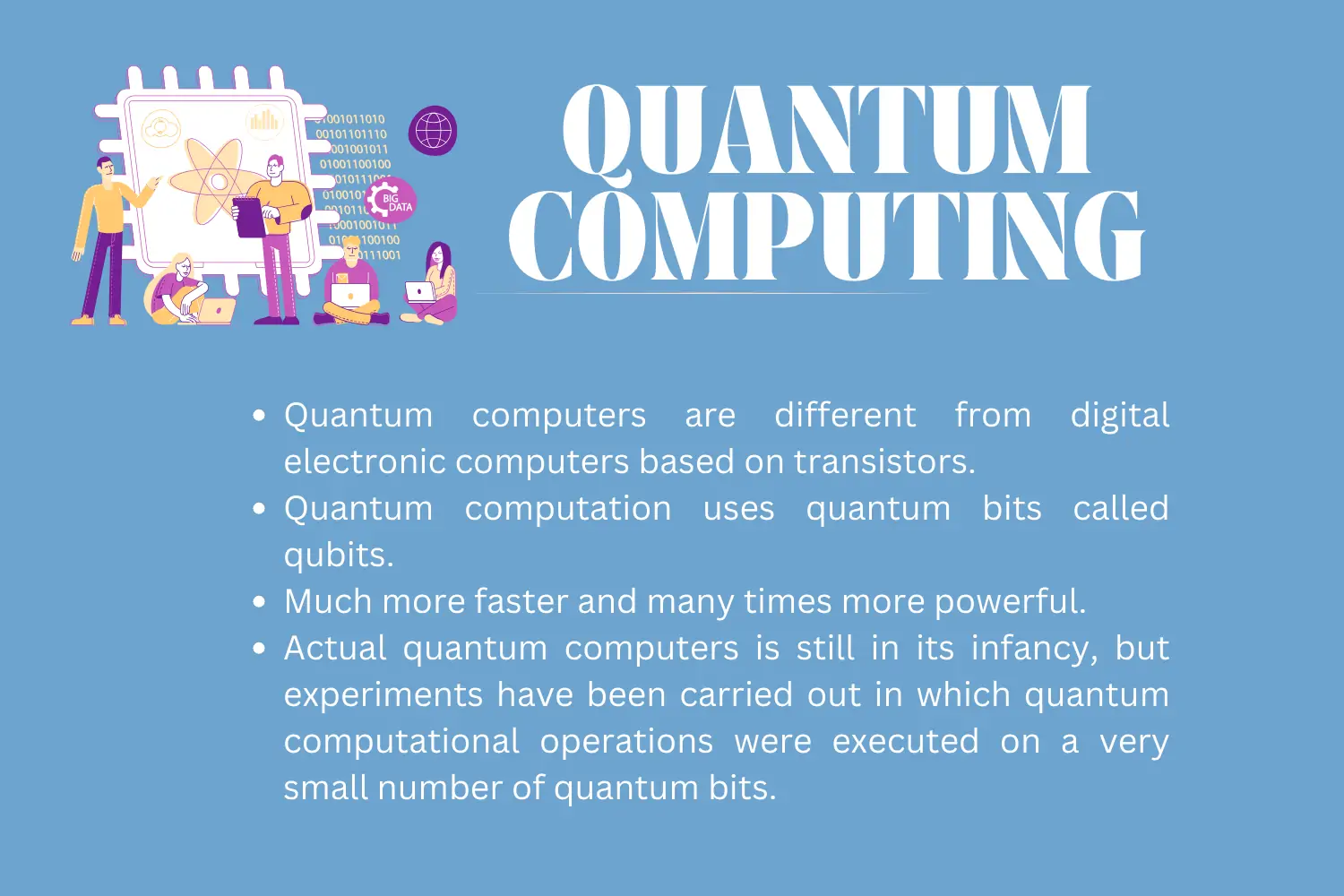
The Quantum Leap represents an epoch-making transition, promising computational power that will redefine industry standards for simulation, optimization, and AI. However, this progress is inherently dual-use, presenting the most profound cybersecurity challenge of the digital age.
The successful enterprises of the next decade will be those that view quantum computing not as a distant threat, but as an immediate, high-priority investment in competitive advantage and defensive security. Becoming “Quantum-Ready” is no longer optional; it is the essential mandate for future technological and financial leadership.