
🚀 The Dawn of Sovereign Artificial Intelligence
The concept of Sovereign AI has rapidly emerged as the defining geopolitical and technological challenge of the 21st century. It refers to a nation’s ability to develop, own, and control its entire Artificial Intelligence (AI) ecosystem—from the underlying computing infrastructure and vast data sets to the foundational large language models (LLMs) and the policies governing their use. This is not merely about using AI tools; it is about achieving technological self-determination, ensuring that a country’s future strategic capabilities are not dependent on foreign powers or external, often commercially driven, entities.
The global race for AI supremacy is fundamentally a contest for power, economic advantage, and national security. Countries recognize that whoever leads in AI development will likely lead the world. This comprehensive analysis explores the multifaceted dimensions of Sovereign AI, detailing why nations are competing fiercely, the core components required to achieve technological independence, and the profound implications for the global order.
I. The Imperative: Why Nations Must Secure Sovereign AI
The drive toward AI independence is rooted in critical national interests spanning defense, economy, and culture.
A. National Security and Defense Implications
AI has become an indispensable element of modern warfare and intelligence, making reliance on external AI infrastructure an unacceptable strategic vulnerability.
A. Ensuring Data Integrity and Secrecy: When sensitive defense or intelligence data is processed by foreign-owned AI models or cloud infrastructure, the risk of espionage, data theft, or unauthorized access escalates dramatically. Sovereign AI ensures that classified data remains within national borders and jurisdiction.
B. Control Over Critical Infrastructure: AI governs everything from power grids and communication networks to missile defense systems. Control over the underlying code and algorithms is vital to preventing foreign sabotage, supply chain attacks, or malicious disruptions during a conflict.
C. Maintaining Military Autonomy: The future of military strategy lies in autonomous systems, including AI-powered drones, surveillance networks, and cyber defense platforms. Nations must develop these systems internally to guarantee their performance, loyalty, and compliance with national ethical and military doctrines.
D. Preventing Technological Lock-in: Relying on proprietary foreign AI software creates a technological “lock-in,” meaning a nation could be forced to use systems that are unilaterally updated, restricted, or withdrawn by the originating country, severely hindering operational continuity.
B. Economic Resilience and Technological Leadership
Sovereign AI is the new engine of economic growth, productivity, and global competitiveness.
A. Fostering Domestic Innovation Ecosystems: Developing a fully sovereign AI stack—from chips to models—spurs massive investment in local research institutions, universities, and domestic technology startups, creating high-value jobs and preventing brain drain.
B. Protecting Intellectual Property (IP): If national innovation relies on foreign AI models, the IP generated by that innovation is often implicitly or explicitly exposed to those foreign entities. Sovereign models protect locally generated IP and ensure economic benefits remain within the country.
C. Customizing AI for Economic Needs: Generic, global AI models may not be optimized for a nation’s unique economic structure, language, or regulatory environment. Sovereign AI allows for the creation of industry-specific models (e.g., for local agriculture, finance, or logistics) that drive tailored productivity gains.
D. Establishing Global Norms and Standards: Nations that lead the development of AI hardware and software are best positioned to influence the global technical standards, regulations, and market conditions for the technology, translating into significant long-term economic leverage.
C. Cultural and Societal Preservation
The language and biases embedded in foundational AI models can profoundly impact a society’s cultural identity and political discourse.
A. Language and Cultural Bias Mitigation: Most foundational LLMs are predominantly trained on English and Western data sets, often failing to accurately represent non-Western languages, historical context, or cultural nuances. Sovereign AI ensures models are trained on rich, locally curated data to preserve and accurately reflect national identity.
B. Controlling Information and Political Discourse: AI-powered generative models are potent tools for creating and disseminating political content, news, and deepfakes. National control over these models is crucial for safeguarding the integrity of democratic processes and countering foreign influence operations.
C. Ensuring Ethical Alignment: A nation can encode its own ethical frameworks, legal requirements, and societal values directly into its sovereign AI models, preventing the adoption of technologies that conflict with its fundamental principles regarding privacy, freedom of speech, or civil rights.
II. The Core Components of a Sovereign AI Stack
Achieving true AI sovereignty requires mastering four interlinked technological pillars.
A. The Hardware Foundation: Semiconductors and Compute Power
The physical infrastructure—the chips—is the bedrock of AI. Control over this layer is non-negotiable.
A. Advanced Semiconductor Manufacturing: This involves the highly complex and capital-intensive capability of designing and fabricating cutting-edge GPUs (Graphics Processing Units), TPUs (Tensor Processing Units), and specialized AI accelerators within national borders.
B. High-Performance Computing (HPC) Clusters: Nations require massive, state-of-the-art supercomputing centers and dedicated AI data centers (AI Factories) capable of handling the enormous computational demands of training foundational models. The scale of investment here is staggering, often reaching billions of dollars.
C. Sustainable Energy Infrastructure: Training and running large AI models consumes vast amounts of electricity. Sovereign AI necessitates strategic investment in sustainable, reliable, and scalable energy sources to power these colossal data centers without compromising climate commitments.
B. The Data Layer: National Data Strategy and Curation
Data is the fuel for AI, and its quality, quantity, and sovereignty are paramount.
A. Establishing National Data Repositories: Creating massive, centralized, and secure data lakes containing nationally relevant, high-quality information (e.g., government archives, scientific data, public domain media) specifically curated for AI training.
B. Data Sovereignty Legislation: Implementing strict laws (like GDPR, but focused on national control) ensuring that data generated within the country is stored, processed, and governed under national jurisdiction, even if held by multinational corporations.
C. Synthetic Data Generation: Investing in technologies that can generate high-quality synthetic data to augment real-world data, especially in sensitive areas like defense or healthcare where real data is scarce or too private to use openly.
C. The Software Layer: Foundational Models and Operating Systems
This is the intellectual core of Sovereign AI—the large language models (LLMs) and core software infrastructure.
A. Development of Indigenous Foundational Models (FMs): Creating FMs that are trained primarily on national data sets, speak the local language fluently, and adhere to national ethical guidelines. This avoids reliance on proprietary models like those from OpenAI (US) or deep-learning frameworks developed by foreign tech giants.
B. Open-Source vs. Proprietary Strategy: Nations must decide on a strategic mix. Utilizing open-source models can accelerate development but introduces dependency on the open-source community; proprietary models offer full control but demand immense resources.
C. Sovereignty in Cloud Infrastructure: Building national cloud platforms, independent of global providers (AWS, Azure, GCP), to host and manage the sovereign AI models, ensuring data residency and operational continuity.
D. Human Capital and AI Literacy
Technology is useless without the talent to wield it.
A. Strategic Investment in AI Education: Overhauling national educational curricula from K-12 through postgraduate levels to prioritize AI, data science, and engineering skills. This requires attracting and retaining world-class AI researchers and developers.
B. Promoting Public AI Literacy: Ensuring that citizens and workers across all sectors have a basic understanding of AI’s capabilities and risks, enabling smooth national adoption and reducing public resistance.
C. Talent Acquisition and Immigration Policies: Creating attractive regulatory and economic environments to recruit top international AI talent while simultaneously developing domestic pools.

III. Geopolitical Dynamics and the Competition Landscape
The race for Sovereign AI is characterized by fierce competition, alliances, and strategic friction.
A. The Bipolar AI Superpowers (US vs. China)
The competition is largely defined by the rivalry between these two giants, each striving for global dominance in the field.
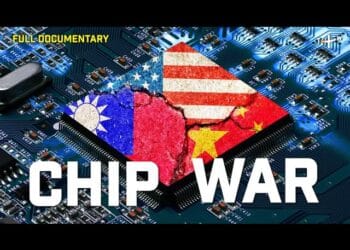
A. The American Model (Commercial-Led Sovereignty): The U.S. relies heavily on its leading private sector (Google, Microsoft, Meta, Nvidia, OpenAI) to drive innovation, supported by substantial government investment (e.g., DARPA). Sovereignty is maintained through export controls (like those on advanced chips) aimed at limiting rivals’ access to U.S. technology.
B. The Chinese Model (State-Led Sovereignty): China employs a top-down, nationally coordinated strategy, leveraging its immense, controlled data pool and directing vast state funds toward achieving self-sufficiency in chips and foundational models. The goal is complete national control over the technology’s application across the economy and military.
C. The Decoupling Effect: The drive for sovereignty is accelerating the technological “decoupling,” where parallel, incompatible AI ecosystems emerge, increasing the risk of technological friction and standardization conflicts.
B. The Challengers: Europe, India, and the Middle East
Other regions are aggressively pursuing their own paths to AI sovereignty, often through strategic alliances and localized models.
A. European Union (EU) Sovereignty: The EU focuses primarily on regulatory sovereignty through the AI Act, aiming to set global standards for ethical and safe AI. Concurrently, it funds projects like the European High Performance Computing Joint Undertaking (EuroHPC) to build independent compute capabilities.
B. India’s AI Ambition: India is leveraging its massive population and robust software engineering talent pool to build open-source-focused, localized models tailored to its dozens of regional languages and diverse culture, emphasizing digital public infrastructure.
C. Middle Eastern Investment (e.g., UAE, Saudi Arabia): Nations in the Gulf are using their immense capital to attract global talent, invest in massive compute infrastructure (e.g., building dedicated AI supercomputers), and acquire foundational models, aiming to become regional AI hubs.
C. The Danger of “Techno-Nationalism”
The pursuit of sovereignty risks descending into protectionism, which could stifle global innovation.
A. Erecting Trade Barriers: Excessive focus on local development can lead to the erection of new trade barriers for AI goods and services, fragmenting the global marketplace.
B. Duplication of Effort: Multiple nations independently building the same foundational models and hardware is an inefficient use of global R&D resources, slowing down humanity’s overall progress in the field.
C. Exacerbating the Digital Divide: Smaller or developing nations that cannot afford the investment required for true sovereignty will be forced into dependency, widening the global technological and economic gap.

IV. Ethical, Legal, and Governance Challenges
Sovereign AI must be governed responsibly to maintain public trust and international stability.
A. The Governance Paradox
A nation’s ability to control its AI can be used for both public good and authoritarian control.
A. Balancing Security and Freedom: While national security demands control over AI, this centralized control must be balanced with mechanisms to prevent misuse for mass surveillance, censorship, or suppressing political dissent.
B. Ensuring Transparency and Auditability: Sovereign AI, often developed for sensitive government use, must be accompanied by rigorous frameworks for transparency, auditability, and clear accountability mechanisms to ensure fairness and prevent bias.
B. International Norms and Arms Control
The weaponization of Sovereign AI requires urgent global dialogue.
A. AI Arms Race Mitigation: The competition risks spiraling into an uncontrolled AI arms race. International frameworks and treaties are necessary to limit the development and deployment of fully autonomous weapon systems.
B. Establishing Norms for Malicious Use: Global consensus is needed on what constitutes the unacceptable malicious use of AI by state actors, such as cyber-attacks against critical infrastructure or large-scale disinformation campaigns.
C. Regulatory Fragmentation
The lack of a unified global regulatory standard creates compliance headaches and slows down legitimate cross-border AI collaboration.
A. The Need for Interoperability: Nations must work towards ensuring their sovereign AI governance frameworks are, at a minimum, interoperable, allowing for safe data sharing and technological exchange.
B. Focusing on Risk-Based Regulation: Future sovereign regulation should focus on the risk posed by the AI system (e.g., a medical AI vs. a recommendation engine) rather than simply where it was developed, fostering a global market for safer technologies.
V. Conclusion: Navigating the Future of Technological Independence
The push for Sovereign AI is an unstoppable historical force, driven by the realization that AI is too strategically important to outsource. It represents the ultimate fusion of national policy, technological capacity, and economic ambition. For a nation to thrive in the decades ahead, it must successfully transition from being a consumer of foreign AI to a creator and owner of its own national AI brain.
The path to sovereignty is long and resource-intensive, requiring not just massive capital investment in hardware and data centers, but a fundamental societal commitment to education, research, and responsible governance. While competition is inevitable, the long-term stability of the global system will depend on whether this intense race for technological control can be managed through cooperation and adherence to shared ethical norms. The future belongs to the nations that control their own algorithms.