The transition from foundational 5G (3GPP Releases 15-17) to 5G-Advanced (starting with 3GPP Release 18 and beyond) represents more than just a marginal upgrade in network speed. It is a pivotal shift that integrates Artificial Intelligence (AI) and Machine Learning (ML) directly into the network core, transforming the communications service provider (CSP) business model from merely selling connectivity to offering highly differentiated, guaranteed-performance services. For any forward-thinking writer or business strategist, understanding the deep-level monetization strategies enabled by 5G-Advanced is crucial for unlocking sustained revenue growth in the next digital decade.
I. The Core Shift: From Connectivity to Guaranteed Experience
The primary challenge of initial 5G deployment was monetizing incremental speed—a hard sell to consumers accustomed to diminishing returns on faster data. 5G-Advanced solves this by enhancing the network’s foundational capabilities, allowing CSPs to charge not for speed, but for Quality of Service (QoS), Reliability, and Ultra-Low Latency—attributes critical to the high-value enterprise market.
A. Technological Pillars of 5G-Advanced Monetization
Release 18 introduces key technical enhancements that are the commercial enablers:
- A. AI-Native Network Optimization: Integrating AI/ML throughout the Radio Access Network (RAN) and Core allows the network to self-optimize in real-time. This leads to predictive maintenance, zero-touch operation, and massive energy efficiency gains (a direct reduction in operational expenditure, or OpEx, which is a key monetization strategy in itself).
- B. Enhanced Network Slicing (E-Slicing): While basic 5G introduced network slicing, 5G-Advanced enables granular, dynamic, and partial slicing. CSPs can now provision and manage dedicated virtual networks (slices) for specific enterprise use cases, complete with guaranteed Service Level Agreements (SLAs) for metrics like latency, jitter, and throughput. This is the foundation for premium B2B charging.
- C. Advanced Exposure Capabilities (API Monetization): The ability to securely expose network capabilities (e.g., location, QoS control, device status) to third-party developers via Network APIs (Application Programming Interfaces). This shifts revenue from the end-user to the ecosystem partner. For instance, a gaming company pays the CSP to guarantee a low-latency slice for their users, or an autonomous vehicle company pays for real-time positioning data.
- D. Extended Reality (XR) Enhancements: 5G-Advanced introduces features like Low Latency, Low Loss, Scalable throughput (L4S) to optimize the transport layer for extremely sensitive applications like VR, AR, and haptic feedback. This directly enables the monetization of immersive consumer and industrial experiences.
II. Business-to-Business (B2B) Monetization Strategies
The consensus across the industry is that the enterprise, or B2B, segment offers the most substantial and sustainable revenue growth for 5G-Advanced. These businesses pay a premium for solutions that solve complex operational problems.
A. Private Networks and Industry 4.0
- A. Dedicated Industrial Connectivity: 5G-Advanced facilitates the deployment of Mission-Critical Private Networks within factories, ports, and industrial campuses. These networks guarantee the ultra-high reliability and sub-10ms latency required for real-time control of robotics, Automated Guided Vehicles (AGVs), and sophisticated sensing.
- Monetization Model: Fixed monthly fee for guaranteed bandwidth and coverage, plus additional charges for managed services and integration with cloud/edge computing.
- B. Digital Twin and Remote Control: The enhanced positioning capabilities (sub-10cm accuracy) and ultra-reliable low-latency communication (URLLC) enable the creation of high-fidelity digital twins of physical assets. This is monetized through a combination of connectivity fees and a Software-as-a-Service (SaaS) or Platform-as-a-Service (PaaS) model for the digital twin software itself.
- C. Industrial IoT (IIoT) at Scale: 5G-Advanced introduces support for RedCap (Reduced Capability) devices and even Ambient IoT, making it economically viable to connect millions of simple, low-power sensors for asset tracking, inventory management, and predictive maintenance.
- Monetization Model: Pay-per-device subscription, tiered by the level of network commitment (e.g., standard coverage vs. dedicated slice).
B. Edge Computing and Data Processing
- A. Multi-Access Edge Computing (MEC) Integration: Edge computing places processing power closer to the end-user or device, which is essential for low-latency applications. 5G-Advanced’s improved core enables better integration and management of MEC resources.
- Monetization Model: Network-as-a-Service (NaaS) selling compute and storage capacity at the edge. CSPs act as cloud providers, charging enterprises for their application’s resource consumption (CPU cycles, storage, data egress) within the network’s trusted edge environment.
- B. Analytics-as-a-Service (AaaS): Leveraging the Network Data Analytics Function (NWDAF) in the 5G Core, CSPs can monetize the vast amount of anonymized and aggregated network data. Enterprises pay for insights into user behavior, network congestion patterns, and device health.
- Monetization Model: Subscription fee for access to customized data dashboards and AI-driven predictive analytics reports.
III. Consumer (B2C) and Business-to-Business-to-X (B2B2X) Strategies
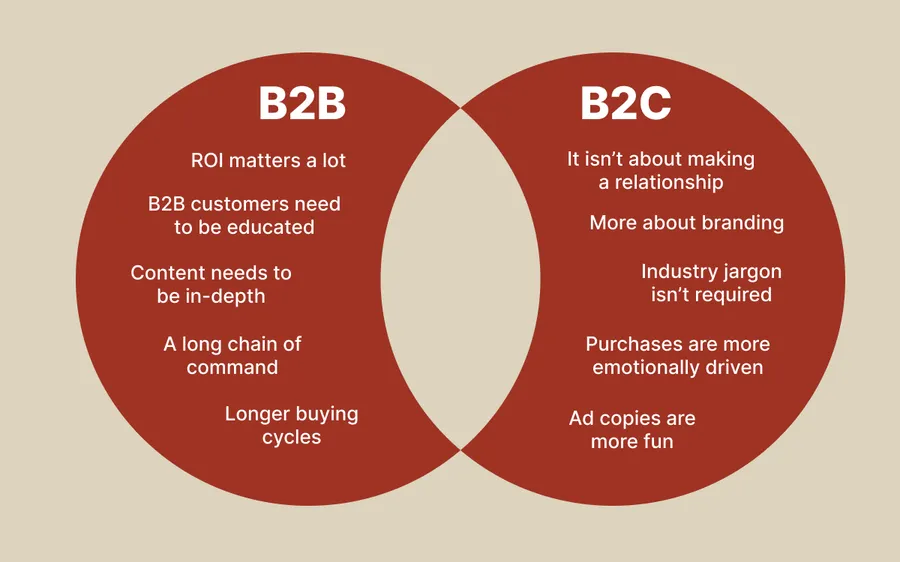
While B2B is the primary focus, 5G-Advanced also refines B2C models by offering tiered quality and new immersive services.
A. Differentiated Consumer Pricing
CSPs must move beyond the flat-rate “all you can eat” data plan that erodes Average Revenue Per User (ARPU).
- A. Application-Specific Quality of Service: Consumers can pay for “Speed Boosts” or “Latency Guarantees” tied to specific applications. For example, a “Premium Gaming Pass” ensures the user’s traffic is prioritized and routed through the lowest-latency slice available for a fixed monthly fee.
- B. Tiered Immersive Experiences: Monetizing the XR enhancements. Consumers pay a premium for cloud-based VR or AR services that require guaranteed high throughput and low jitter. This could be integrated into partnerships with entertainment providers.
- C. Enhanced Fixed Wireless Access (eFWA): 5G-Advanced dramatically improves the reliability and capacity of FWA, allowing CSPs to compete directly with fixed-line broadband providers.
- Monetization Model: Tiered home broadband subscriptions based on guaranteed speed and data caps.
B. The B2B2X Ecosystem Model
This is the long-term, high-growth model where the CSP enables a third-party business (B2B) to deliver a superior service to their customer (X, which could be a consumer, another business, or a public agency).
- A. Telemedicine and Remote Surgery: A hospital (B2B) pays the CSP for an ultra-reliable, high-definition network slice to conduct remote diagnostics or even robotic surgery (X=Patient).
- B. Connected Cars and V2X Communication: An automotive manufacturer (B2B) pays the CSP for real-time Vehicle-to-Everything (V2X) communication, enabling safer driving and autonomous features (X=Driver/Public Safety).
- Monetization Model: Revenue sharing on the end-user service, usage-based charging (per hour of guaranteed service), or an annual fee for network capability exposure.
IV. Operational and Economic Optimization (Indirect Monetization)
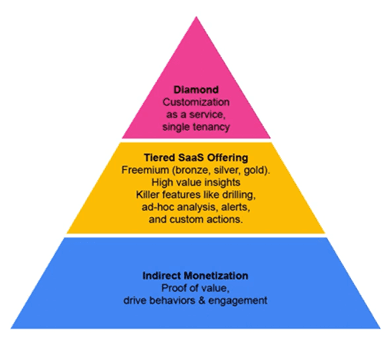
Monetization isn’t just about collecting new revenue; it’s also about optimizing the underlying cost structure and enhancing business agility.
A. AI-Driven Cost Reduction
- A. Energy Efficiency: 5G-Advanced features like intelligent sleep modes and adaptive antenna configurations lead to significant energy consumption savings (up to 30-50% in some scenarios). This is a direct, substantial cost monetization method.
- B. Zero-Touch Operations (ZTO): By automating network fault detection, self-healing, and service provisioning through AI, CSPs reduce the need for manual intervention, dramatically lowering Operational Expenditure (OpEx). This operational efficiency is a crucial part of the overall monetization picture.
B. Agility and Time-to-Market (TTM)
- A. Service Orchestration and Automation: The enhanced 5G Core allows for faster provisioning of new, complex services (like a new network slice for a pop-up event). Accelerated Time-to-Market means new revenue streams can be activated faster, capturing fleeting commercial opportunities.
- B. Open Gateway Initiatives: Industry initiatives like GSMA Open Gateway standardize the exposure of network capabilities via APIs, making it easier for CSPs to integrate with global partners, thereby rapidly expanding the B2B2X market potential.
The ultimate success of 5G-Advanced monetization hinges on the CSP’s ability to shift its mindset from a utility provider to a digital platform enabler. By leveraging technical capabilities like E-Slicing and AI-Native operations to guarantee performance and expose network intelligence, the industry is finally poised to realize the full financial potential of the “G” evolution.